
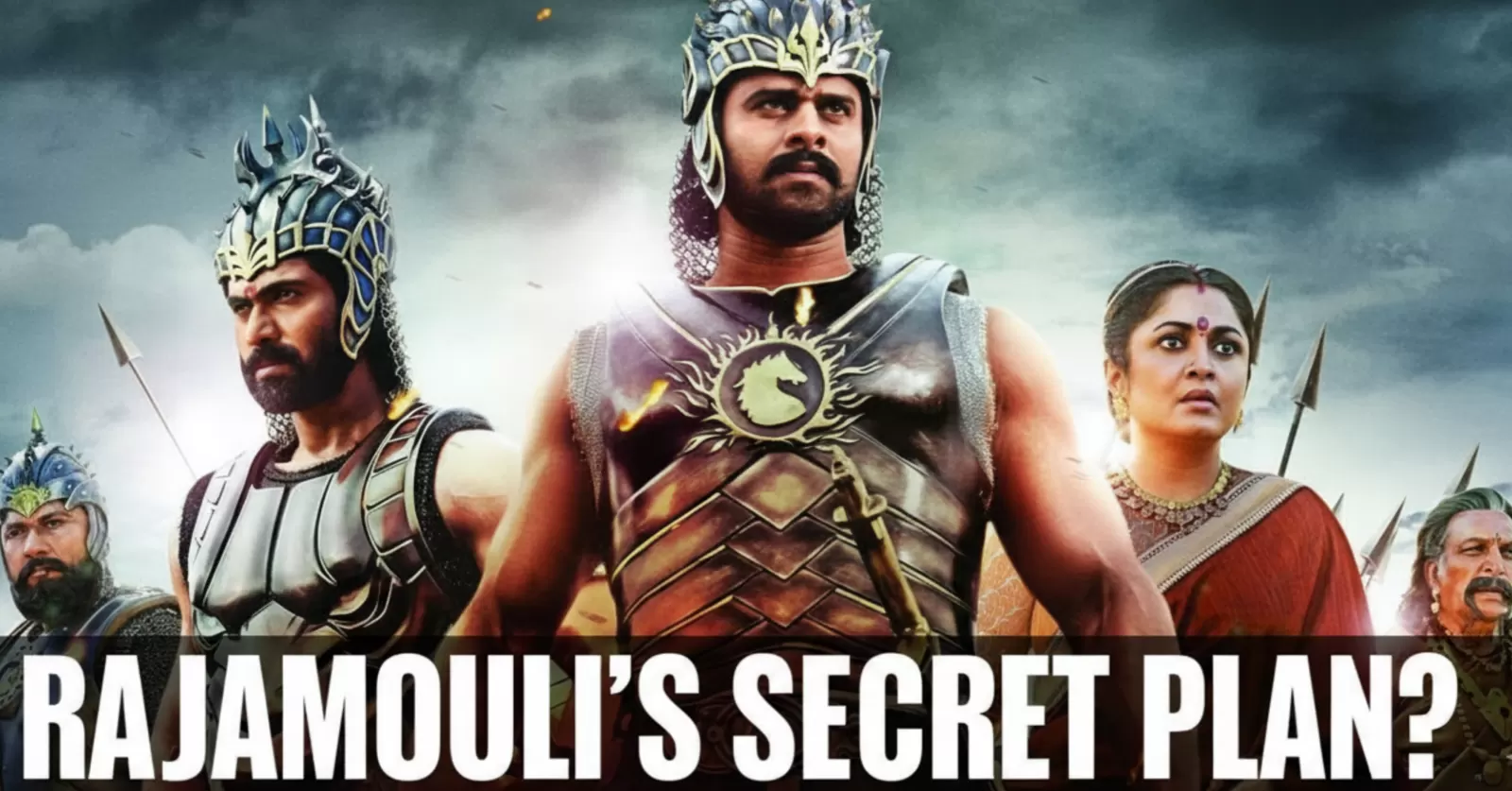
There is a quiet choreography behind every rumor: a seed, a whisper, a misread tweet, and then the machine of fandom sets off. In the weeks since S.S. Rajamouli’s team began promoting a remastered single-film version of his two-part epic, speculation about a third Baahubali has taken on a life of its own part hope, part impatience, part outright wishful thinking. The director has offered tantalizing, carefully worded comments that both correct the record and intentionally widen the map of possibility: the “next” Baahubali will expand the universe, but it may not arrive in the shape fans expect.
What Rajamouli actually said and why wording matters
During recent promotional interviews around the re-release titled Baahubali: The Epic, Rajamouli made two distinct points that have been conflated across headlines. First: his creative plans for the Mahishmati saga are not finished the world will return. Second: the immediate next step is an animated expansion, a 3D project distinct from a live-action sequel. Journalists transcribing soundbites into click-hungry headlines compressed nuance into certainty; fans read confirmation where there was only affirmation of intent.
The director’s emphasis on “continuation of the world” rather than “Baahubali 3” has been interpreted variously as a deferral, a recalibration, and a stealth strategy. If you strip away the social feeds and the headline rewrites, the facts are clear: Rajamouli and his collaborators announced a big-budget (reported at roughly ₹120 crore) 3D animated film tied to the franchise, and separately acknowledged that a third live-action installment remains an eventuality. Those two announcements can coexist without contradiction one is a near-term creative project, the other a long-range promise.
Why an animated Baahubali makes strategic sense
Think of animation as a pressure valve and a laboratory at once. Animation allows storytellers to explore parts of Mahishmati that the live films only hinted at distant kingdoms, subtler political intrigues, or sequences that would be cost-prohibitive on a set. It also gives the franchise a product that travels well across platforms: TV, streaming, merchandise, theme parks. Studios around the world have used animation to keep tentpole properties active between tentpole releases. For Rajamouli a filmmaker obsessed with scale and visual invention animation is not a second-tier option. It’s a way to push the visual language of the world further while the complex logistics of a major live-action shoot are worked out.
Budget and collaborators
Public reports peg the animated venture in the ₹120 crore bracket, and Rajamouli has referenced partnerships with established animation houses. That figure suggests ambition: high-end 3D animation is expensive, especially if the team aims for feature-film quality rather than short or serial formats. For context, that budget sits well above many Indian animated projects and signals an intent to compete for an international audience as much as a domestic one.
The tricky business of promise versus production
Franchise announcements are as much about managing expectation as they are about revealing timelines. Rajamouli’s track record makes any promise weighty after all, the two Baahubali films transformed Indian cinema’s box office and production economics. But the director has also been candid about the demands of scale: prepping a major live-action epic involves scriptcraft, casting, international co-production talks, visual-effects roadmaps, and financial underwriting. Saying “Baahubali 3 is there” is different from saying “Baahubali 3 will begin shooting next year.” In industry terms, Rajamouli has flagged intent; he has not greenlit a defined production schedule in public.
What the animation route changes and what it doesn’t
Moving into animation changes several variables but preserves others. It alters production cadence (animation pipelines operate on different timelines than live shoots), and it expands the palette of what’s possible on screen. It also affects who the story reaches: animation can skew younger and appeal to global platforms that value serialized or family-friendly IP. What it doesn’t change is the franchise’s core mythology. Mahishmati’s political and moral architecture its dynastic conflicts, prophecy beats, and the recurring theme of power and legitimacy remain fertile for deeper exploration in any medium.
Fan expectations, memory, and the weight of the original
One factor that complicates any successor is the cultural gravity of the 2015–2017 films. Audiences attach memory and emotion to the original performances, to certain sequences that became touchstones, and to the sense of spectacle those films carved into popular consciousness. A live sequel must contend not only with storytelling choices but with the logistics of casting and with the emotional continuity that fans expect. An animated detour gives creators breathing room: it refreshes interest without forcing immediate decisions about which actors will return or how to reconcile time jumps in a live canon. Fans may grumble some will call animation a distraction but others will be relieved to receive new stories sooner rather than waiting years for mammoth live productions.
Industry signals: why other studios will watch closely
For Indian cinema’s production ecosystem, the Baahubali franchise is a bellwether. How Rajamouli balances animation and live action will inform investment strategies for other tentpoles. If a high-budget animated Baahubali proves commercially viable in theatres, on streaming windows, and in ancillary markets it could accelerate hybrid franchise strategies across Bollywood and regional industries. Studios keen on exporting culture will read the box office and platform deals for signals about the international appetite for Indian mythic cinema in animated form.
Possible timelines and a cautious reading
Predicting dates would be reckless; instead, map the sequence. First: the animated project will move through pre-production and announcing a teaser (which Rajamouli referenced in promotions). Next: the animation pipeline will require a year or more depending on scope. Meanwhile, the director’s live-action slate including other projects now in public view will influence when he can pivot back to a full-scale Baahubali 3. That roadmap implies a staggered approach rather than a single leap: constant universe expansion with different media forms arriving at different times.
How to read the rumors
- Confirmed: Rajamouli plans to expand Baahubali’s universe and he has announced an upcoming 3D animated project.
- Likely: Franchise activity will continue across formats to keep the IP active between major releases.
- Unconfirmed: A specific production schedule, cast list, or shooting start date for a live Baahubali 3. Those remain unannounced.
What fans and critics are watching next
Eyes will be on the animation’s first teaser and on any statements that clarify whether the arc told in the animated film feeds directly into a live sequel or exists in a parallel timeline. Critics will assess tone and narrative ambition; fans will parse every frame for canonical hints. Beyond the immediate spectacle, the larger question is creative appetite: will Rajamouli and his collaborators take risks that reshape the franchise, or will they deliver familiar beats with larger budgets? Either path will seduce different parts of the audience.
Final note: patience as common sense
For now, the sensible posture is curiosity over certainty. Rajamouli’s statements place the franchise on a clear trajectory expansion, experimentation, and eventual continuation but they do not convert intent into instant production. The smart bet is to expect new Baahubali content, but not to expect it all at once or in the format fans first imagined. If the animated project lives up to its reported scale, it could become the most interesting bridge between the original films and whatever colossal live-action chapter Rajamouli eventually chooses to mount.
FAQ
Is Baahubali 3 officially confirmed?
Rajamouli has made it clear that the Baahubali universe will continue in some form. The next confirmed step is a large-scale animated project, while a live-action Baahubali 3 is still an eventual plan without a public production timeline.
What is the new animated project about?
Early details point to a high-budget 3D animated film estimated around ₹120 crore. Rajamouli has mentioned a teaser in the works and described the project as a way to explore more corners of the Baahubali world.
Are the original actors expected to return?
No official casting announcements have been made for a live-action sequel. Animation often uses different voice actors or stylized interpretations of characters, so the immediate cast lineup may not mirror the earlier films.
Fans should treat each new release as a clue rather than a guarantee. The most reliable updates will come from Rajamouli’s own statements and official production announcements not from the rumor mill. Until then, Mahishmati remains a living set of possibilities: a world with room to grow, told through a variety of forms, and watched by an audience that expects nothing less than spectacle.