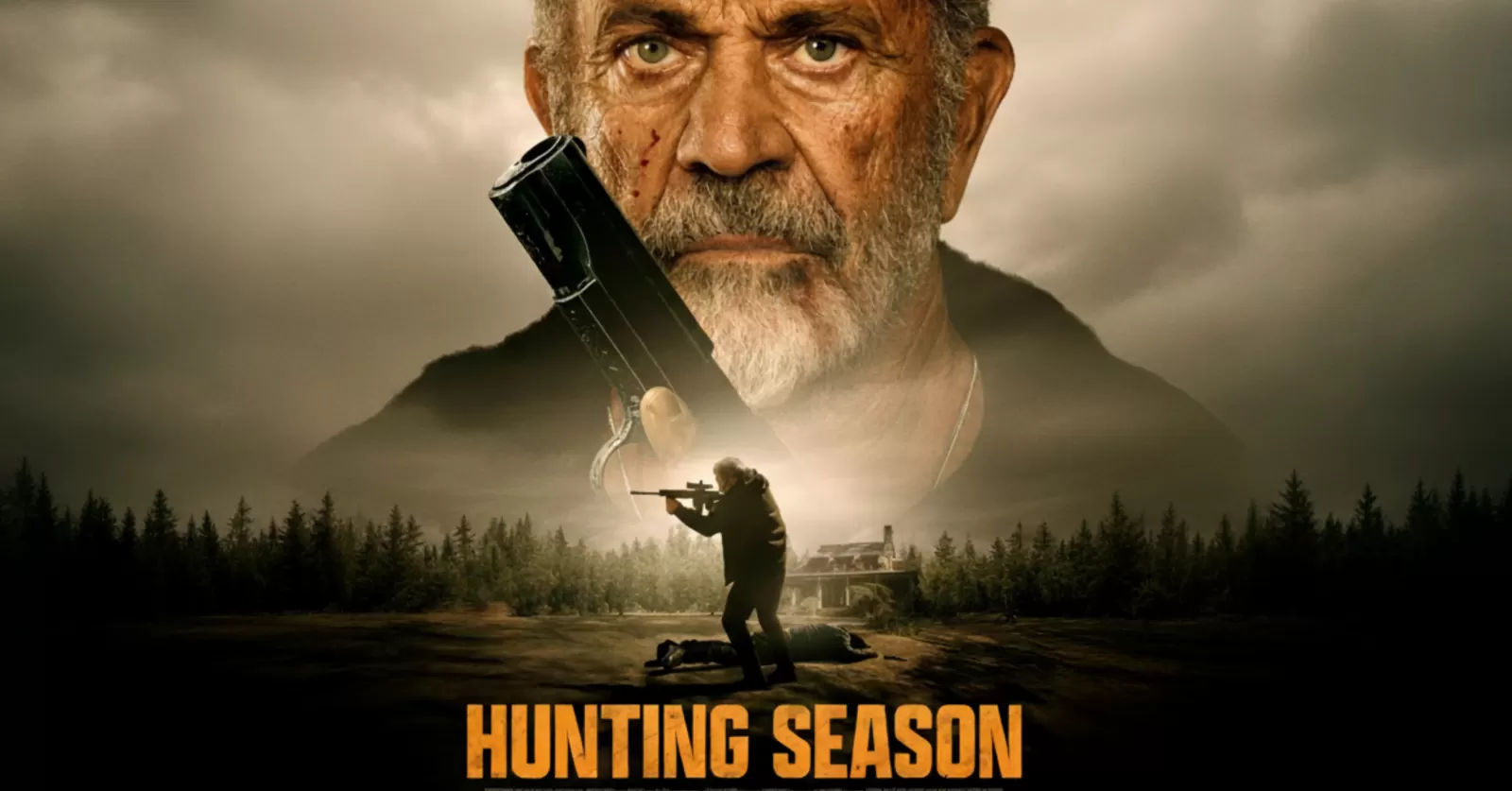
Hunting Season Review: A Survival Thriller About Control, Fear, and What the Hunt Takes From You
There is a particular kind of fear that does not announce itself with noise. It settles in quietly, long before the chase begins. Hunting Season understands this instinctively. From its earliest moments, the film creates tension not through action, but through awareness. Someone is being watched. Someone always is.
Rather than rushing into violence, the story takes its time establishing a mood of unease. The forest is not framed as a wild playground or a heroic proving ground. It is neutral, indifferent, and vast. What turns it into a nightmare is human intention. By the time the hunt truly begins, the film has already made one thing clear. This is not a story about survival skills alone. It is about power, and the people who believe they are entitled to exercise it.
The Simple Story Viewers Think They Are Watching
At a glance, Hunting Season appears to be a familiar survival thriller. A group enters a remote space. Something goes wrong. One person becomes prey. The tension escalates as pursuit replaces cooperation. Viewed casually, the film looks like a stripped-down man-versus-environment story with human antagonists filling the role of predators.
This surface reading is not wrong, but it is incomplete. The plot mechanics are intentionally straightforward. The film does not want the audience distracted by complicated twists or mythology. The danger is real, immediate, and human. That simplicity allows the deeper themes to surface without competition.
What the Film Is Really Examining Beneath the Chase
Beneath the survival framework, Hunting Season is a study of control. Not just who has it, but who believes they deserve it. The hunters do not see themselves as villains. They frame their actions as sport, tradition, or necessity. Language becomes their first weapon.
The film repeatedly shows how power disguises itself as order. Rules are invented to justify cruelty. Boundaries are drawn to excuse exclusion. The prey is dehumanized long before the chase begins, making violence feel earned rather than chosen.
What makes the film unsettling is how recognizable these justifications feel. The hunt becomes a metaphor for any system where dominance is normalized and accountability is absent. The forest does not corrupt the characters. It reveals them.
Its psychological tension recalls the survival anxiety of Shelter, while the emotional toll of pursuit mirrors the exhaustion explored in Dhurandhar.
The Moment the Film Quietly Changes Direction
There is a pivotal moment when the story stops feeling like a game of pursuit and starts feeling like a moral reckoning. It arrives not with a kill or a narrow escape, but with hesitation. One character pauses, not out of fear, but uncertainty.
That pause matters. It introduces doubt into a space built on certainty. Up until that point, the hunt has been driven by confidence. The belief that power ensures safety. The hesitation cracks that illusion.
From this moment onward, the film’s tension deepens. Survival is no longer just about escaping the hunters. It is about resisting the logic that made the hunt acceptable in the first place.
The Psychology of the Hunted
The central character’s journey is not defined by physical endurance alone. What they struggle with most is internal. The pressure to react instead of think. To become what the hunters expect.
Fear pushes them toward instinctive choices, but the film is careful to show restraint. Violence is not glamorized as empowerment. Each defensive act carries emotional cost. Survival, here, is exhausting.
The character’s strength lies not in aggression, but in refusal. Refusal to internalize the hunters’ narrative. Refusal to accept that being targeted makes them lesser. That quiet resistance becomes the film’s moral center.
The Hunters and the Performance of Power
The antagonists are not portrayed as monsters. That is what makes them frightening. They are composed, articulate, and convinced of their own fairness. Their cruelty is wrapped in civility.
The film exposes how power often relies on performance. Jokes are used to deflect responsibility. Rituals create the illusion of legitimacy. When challenged, the hunters react not with shame, but offense.
This dynamic highlights the film’s most uncomfortable insight. Violence does not require rage. It often arrives through calm certainty.
Why the Setting Feels So Oppressive
The forest is shot without romanticism. It is neither beautiful nor hostile. It simply exists. This neutrality amplifies the horror. There is no external villainy to blame. No storm. No supernatural force.
The land becomes a mirror. It reflects the characters’ intentions back at them. Those seeking dominance find isolation. Those seeking escape find silence.
By refusing to sensationalize the environment, the film keeps responsibility where it belongs. With people.
Why the Film Will Not Please Everyone
Some viewers may find Hunting Season restrained to the point of discomfort. The film avoids cathartic revenge and clear moral victories. It offers tension without indulgence.
Others will appreciate that discipline. The refusal to turn suffering into spectacle gives the story weight. The film trusts the audience to sit with unresolved feelings.
This divide is intentional. The film is not interested in pleasing everyone. It is interested in asking why certain stories make us comfortable.
The Meaning of Survival in the Final Act
The conclusion does not frame survival as triumph. It feels more like endurance. The cost of the hunt lingers even after immediate danger fades.
What the character carries forward is not victory, but clarity. An understanding of what was taken and what was preserved. The film resists closure because closure would feel dishonest.
Survival, here, is not the end of the story. It is the beginning of reckoning.
Final Reflection
Hunting Season is a thriller that strips the genre down to its moral core. By focusing on control, fear, and the systems that normalize cruelty, it transforms a chase into a confrontation with power.
The film lingers because it refuses easy comfort. It asks not whether the hunt was justified, but why it was allowed to begin at all. And that question is far more unsettling than any pursuit.
Indian Decisions Editorial Note: This article presents original analysis based on narrative interpretation and thematic study, not reproduced commentary.