
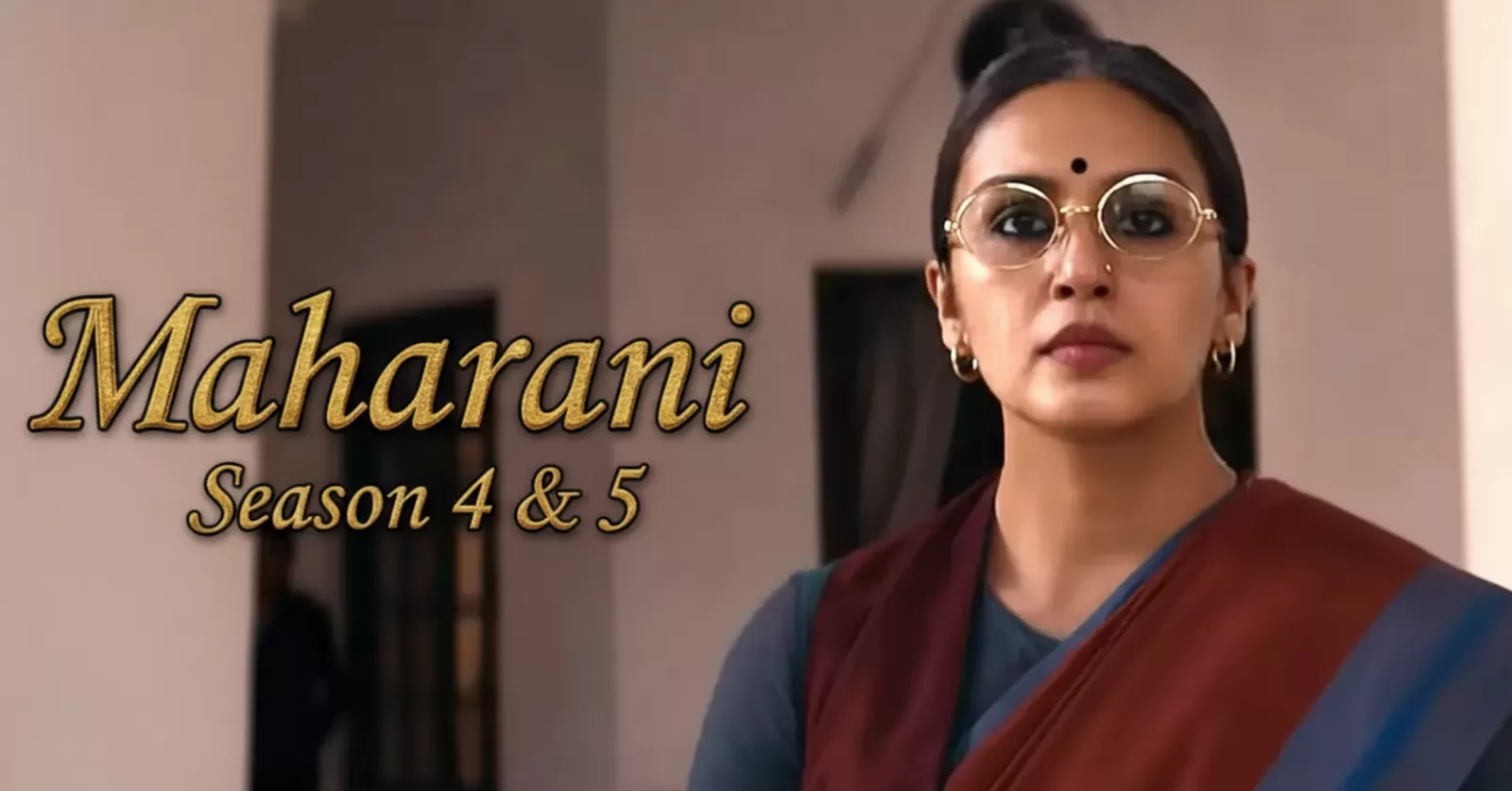
She returns not with the small-town awkwardness of the woman who once stepped into a chief minister's office by accident, but with the measured, impatient stride of someone who has learned how to hold a room. In the opening moments of the latest season, Rani Bharti Huma Qureshi's political anchor walks into a Delhi corridor that feels colder and larger than the assembly hall we last left her in. The camera lingers on the way she studies the varnish on a door as if calculating whether it will bend for her.
A quick frame: where Maharani is now
The fourth season of Maharani premiered on SonyLIV on November 7, 2025, taking the series beyond Bihar's parochial battlegrounds and into the messy, coalition-era national theater. The new chapters push Rani from state power to the precipice of national relevance, positioning her as a two-term chief minister with eyes on larger office. This shift is not just geographical it reorients the show’s scale, stakes and the kinds of compromises its protagonist must make.
What changed, in short
Where earlier seasons treated politics as something that happened door-to-door, season four treats it like chess played in an echoing hall: alliances made and razed, newspaper headlines as weapons, public grief as leverage. The show also expands its canvas shooting sequences in locations outside India and threading a globe-trotting subplot (a controversial Kohinoor motif features in promotional copy) that underlines how regional narratives bleed into national myth.
Rani’s arc: from reluctant symbol to deliberate player
When I first watched Rani, in the show's earliest episodes, she felt like a cipher a homemaker deputed to keep a seat warm. By season four, she is not only an experienced operator but someone who has learned the brutal arithmetic of survival in public life. During my rewatch, small gestures stood out: the way she ignores applause that feels performative, or the way she rehearses an answer to a reporter’s question with the same mechanical patience she once used to arrange silverware.
That evolution is essential to the season’s drama. The writers have been deliberate: show us the cost. Rani is not simply gaining power for its own sake; she is navigating a field where allies are liabilities and opponents wear smiles that mask knives. The stakes personal and political feel lived-in. A domestic scene in mid-season, where she argues with a trusted aide about whether to pardon a minor offender, reads as a character study as much as a policy debate. It is about the voices that define a leader’s conscience.
Performances that tip the balance
Huma Qureshi remains the axis. Her performance now has the comfort of someone who knows the geography of a role. Small, precise choices a clipped laugh, a hand that refuses to rest on a desk give Rani the texture of a woman who has cultivated armor. Supporting players, from veteran antagonists to new entrants introduced this season, supply the friction her story needs. Casting additions bring their own baggage and credibility, and the ensemble chemistry levers up the political tension.
The political canvas: coalition-era India on-screen
If the first seasons mined the politics of a single state, season four aims to evoke the wider instability of a country driven by coalition governments, backroom deals and the constant threat of a collapsing alliance. The show leans into that era’s anxieties the fragility of federal bargains, the temptation to exchange principle for office, and the relentless media chorus that turns missteps into career-ending narratives.
Scenes set in New Delhi are louder, even when they physically happen in quieter rooms: the hum of a distant press conference, the static of a live television feed, the tiny tremor of a handshake. These sonic choices remind you that power is as much performed as it is held. The series uses those performances to ask a simple question: can a leader with roots in a marginalised constituency translate authenticity into a national mandate without losing the people who made them?
Writing that leans on real history
The show remains inspired by real political events and figures from Bihar’s recent past, though it never pretends to be documentary. Instead, it takes liberty with timelines and personalities to craft a narrative that reads like a political fable raw enough to feel urgent, shaped enough to sustain suspense. The result is familiar and fresh at once: recognizable dynamics repackaged for the streaming era.
Season 5: will the crown grow heavier?
Talk about a fifth season is already circling. In interviews since the fourth season's run, Huma Qureshi has answered questions about the show's future with the pragmatic optimism of someone focused on the present, while not closing the door to more. Insiders and entertainment writers have noted that the show’s popularity and the political avenues it opens make a further season plausible if not inevitable.
What could a fifth season do? The logical path is escalation: move from national opposition to national office, or chart the slow corrosion of Rani’s reformist impulses as she learns the cost of governing at scale. Another path would be a deeper dive into the show’s supporting institutions the think tanks, spin-doctors, and the Judiciary and how they reshape political outcomes in ways that footage of campaign rallies cannot capture.
Two likely turns
- Consolidation and compromise: As a figure gains reach, compromises multiply. Season five might explore the moral arithmetic when policy gains demand political trade-offs.
- Personal reckoning: Power has a personal tax. A fifth season could dramatize the erosion of private life under public glare the family torn between duty and survival.
Why Maharani still matters
There’s a practical reason the show holds attention: it offers a way to watch familiar power plays refracted through different class and gender lenses. Watching Rani recalibrate is not simply voyeuristic; it is instructive. Her missteps and victories map onto conversations India has been having offscreen for years: who gets to lead, what compromises are permissible, and whether moral clarity survives electoral politics.
And then there is the craft. Direction in season four is more expansive, the production values higher. The series’ tonal risk turning a regional drama into a national narrative mostly pays off because the writers commit to the emotional throughline: Rani’s interior life. When the political machinery threatens to flatten nuance, the show pulls back to private moments that anchor the narrative.
What to watch for
- The way the writers use the media as a character. In season four, television and social outrage function like unseen ministers, shaping policy through pressure rather than mandate.
- Rani’s rhetorical shifts. There are moments when she speaks for voters and others when she speaks for power; the tension between those voices will determine whether she is a survivor or a revenant.
- New characters who are not just obstacles but mirrors people who will pose the question: are you still the person who started this journey?
Final scene: a look ahead
Series television often promises transformation and then hesitates when asked to pay the price. What keeps Maharani compelling is that it rarely shirks the cost. If season four thrusts Rani into a larger arena, it also refuses to let her forget where she came from. That tension the push and pull between origin and ambition is where the series finds its heartbeat.
Speaking with crew members during a press briefing, one line caught my attention: “She’s always been a survivor. Now she has to become a strategist.” If season five arrives, the central drama will likely be that shift: from surviving to strategizing, and from moral certainty to strategic ambiguity. Either way, the series has stayed true to a rare promise in political drama: that winning sometimes asks more of you than losing ever did.
FAQ
When did Maharani Season 4 release?
It premiered on November 7, 2025, on SonyLIV, rolling out with a larger political canvas and a sharper focus on Rani Bharti’s national rise.
Is Maharani Season 5 confirmed?
There’s no official announcement yet. The team has hinted that a fifth season is possible, depending on audience response and where the writers want to take Rani’s journey next.
Is the series based on real events?
Several story threads draw inspiration from political developments in Bihar and the coalition-era dynamics of Indian politics. The show, however, blends these influences with fictional characters and crafted timelines to build its own narrative world.
Maharani continues to evolve, widening its scope while keeping Rani Bharti’s inner conflict at the center. Season 4 pushes her into the national spotlight, raising the stakes for every choice she makes. A fifth season isn’t confirmed, but the creative team hasn’t closed the door, and the show’s momentum suggests there’s still room to explore her political ascent and its personal cost. Whether the story continues or pauses here, the series remains a sharp, character-driven look at power, pressure and the compromises that shape modern Indian politics.