
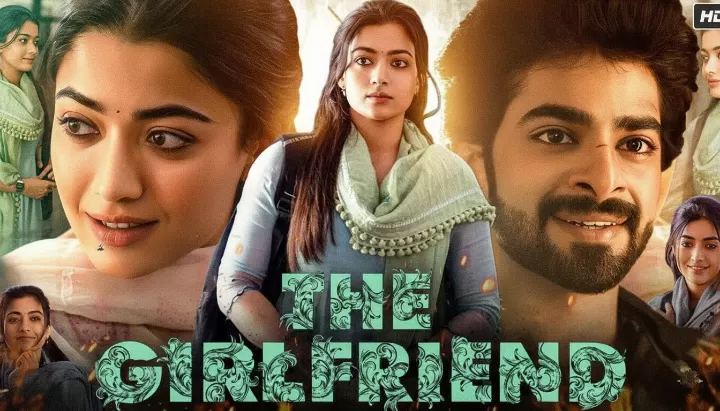
It was one of those late-night screenings in Hyderabad where half the audience seemed to have arrived straight from work. People leaned back in their seats, arms crossed, waiting for something sharp, something that would justify leaving home on a weeknight. “The Girlfriend,” the new Telugu psychological drama, doesn’t reveal its intentions right away. It starts quietly, almost deceptively, and then crawls under the skin. By the time the climax arrives, the theater was strangely silent, as if everyone was trying to reconcile what they had just witnessed.
This film has been marketed as a romantic drama, but sitting through it, I quickly realized it is far more introspective and unsettling than that label suggests. It is a story about obsession disguised as love, loneliness packaged as devotion, and the thin line between affection and emotional control. For those trying to understand the plot, the twists, and especially the final stretch, here is a deep look at the film’s narrative and what it’s really saying.
The Story Begins
The film centers on Arun, a socially reserved young man with a stable job but very little going on in his emotional life. He walks through daily routines without real company meals eaten alone, conversations limited to quick replies, evenings spent in his apartment with more silence than sound. Watching his world unfold on screen, I was reminded of similar individuals I have met in real life who seemed outwardly fine but were quietly folding into themselves.
Arun’s life shifts when he meets Divya, a bright, confident woman who works in the same building. Their first interactions are small and believable brief greetings, casual exchanges about work, and the kind of awkwardness that comes when one person feels something more than the other realizes. Divya doesn’t fall for Arun immediately, nor does the film rush the relationship. Instead, it takes time to show him slowly opening up, finding comfort in attention he had never experienced before.
Love or Projection?
The interesting twist is that the audience understands Arun’s emotional hunger long before Divya does. He interprets kindness as affection, concern as commitment. People in the theater whispered during these moments, some sympathizing, others cringing because they had known someone who read too much into simple gestures. The writing places us in his head without endorsing it, giving equal weight to his loneliness and his growing misinterpretation of reality.
The relationship progresses, but not equally. Divya sees it as dating, maybe even casual at first. Arun sees it as destiny. This imbalance is where the film finds its uncomfortable energy.
When Affection Turns Dark
The slow emotional unraveling is what sets “The Girlfriend” apart from standard romance. The shift happens gradually. Arun begins monitoring Divya’s movements, her phone notifications, the people she speaks to at work. He is not loud or aggressive in the beginning. Instead, his control starts with questions disguised as anxiety:
- “Why didn’t you answer earlier?”
- “Who were you talking to?”
- “You didn’t tell me you were going out tonight.”
These lines weren’t shouted. They were whispered but heavy enough to change the air between them. Divya initially overlooks the signs as emotional insecurity. But as the film goes on, Arun stops pretending that he is just uncertain; he begins acting as if he is entitled to her world.
Watching the movie, I noticed some viewers shift in their chairs during these scenes. It was not because the story was extreme, but because it was disturbingly familiar. The screenplay doesn’t exaggerate. Many relationships slide into control exactly like this slowly, quietly, and without clear boundaries until someone is already cornered.
Escalation and Consequence
The midway twist happens when Divya confides in Arun that she feels suffocated. She asks for space, hoping a temporary pause will reset the balance. Arun hears something else entirely: rejection, betrayal, abandonment. Instead of processing the situation, he spirals.
This is where the film becomes a psychological character study. He begins stalking her without admitting to himself that he is doing anything wrong. In one particularly gripping scene, he follows her home under the pretext of “protecting her,” though it is obvious he is trying to confirm she isn’t meeting someone else. His mind clings to the belief that they belong together, even as she tries to break free.
The Final Act
The ending is the part that has sparked the most discussion, especially online. When Divya finally ends the relationship for good, Arun’s emotional thread snaps. His obsession turns into possession. His actions in the final scenes are neither that of a lover nor a partner but someone who cannot accept that love is a choice, not a guarantee.
In the climax, Arun confronts Divya in a scene that is sharply produced and raw in its performance. The confrontation is not a theatrical showdown but a believable argument filled with interrupted sentences, raised voices, and desperate attempts to be heard. Arun keeps insisting that they can fix everything if she simply gives in. Divya, exhausted and frightened, refuses.
Instead of violence, the film chooses a more tragic resolution. Arun breaks down completely, realizing the person he imagined was never real. His “girlfriend” was partly a reflection of his wants, projected onto someone who never agreed to carry that weight. In the final moments, the camera lingers on him sitting alone, finally facing the emptiness he had been running from since the beginning.
The ending is haunting not because something shocking happens, but because nothing dramatic is needed. The quiet collapse is enough.
What the Ending Really Means
Many audience members seemed to leave the theater debating whether the film sympathizes with Arun or condemns him. The more thoughtful reading is that “The Girlfriend” shows how emotional isolation can warp someone’s idea of love. Arun is not a villain in the traditional sense. He is someone who never learned how to form healthy attachments, who doesn’t understand that affection requires respect, and who mistakes attention for ownership.
The film asks an uncomfortable but necessary question: what happens when someone who has never been loved finally receives it, but doesn’t know how to hold onto it?
From what I observed in reactions during the screening, viewers understood that the tragedy is not the breakup. It is that Arun never had the emotional tools to handle connection. His pain is real, but so is the damage he causes.
The Film’s Commentary
Without preaching, the story reflects on:
- The rise of modern loneliness in urban life
- Parents and schools rarely teaching emotional literacy
- The societal pressure on young men to “figure it out alone”
- How easily romance narratives can distort the idea of partnership
The film does something unusual for Telugu cinema: it steps away from the idea that love is always noble or admirable. Sometimes love is just need, and need can quickly become control.
The Performances
The success of the film rests heavily on the two leads, and they deliver convincingly. Arun is played with restraint. The actor avoids loud theatrical expressions, allowing discomfort and panic to surface in the eyes, the silence, the pauses between sentences. Divya, on the other hand, is written as someone who is confident but not invincible. She tries to help, tries to communicate, tries to compromise, until she finally understands that the relationship cannot survive without mutual respect.
The smaller supporting characters are used sparingly but effectively a concerned colleague, a distant family member, office friends who notice the shifts before Arun does. These touches make the world more familiar, more realistic, and closer to everyday relationships around us.
FAQ
Why didn’t Divya leave earlier?
Because many people in real life don’t. Most try to fix things first. They hope someone they care about will grow. Divya’s hesitation is believable and painful in the same measure.
Was Arun mentally ill?
The film avoids diagnosing him, which is smart. Instead, it paints a portrait of emotional dysfunction, not a clinical condition. He is a person broken by years of isolation, not a villain defined by malice.
Is the ending hopeful?
In a way, yes. Arun finally sees himself clearly. The tragedy is that clarity arrives only after everything has fallen apart.
Why the Film Resonates
Walking out of the theater, conversations floated around me in fragments. One group discussed a cousin who behaved similarly in a relationship. A young woman recalled how she had once dated someone who became insecure every time she made plans without him. A middle-aged man simply said one sentence: “I’ve been both of them at different points in life.”
That’s the strength of “The Girlfriend.” It may be packaged as a romantic drama, but beneath that is a story about something universal: the fear of being alone, the hunger to belong, and the damage people can inflict when they refuse to accept that love is a two-way street.
Viewers expecting a conventional love story might be surprised. But those who have lived through difficult relationships, or have watched someone close struggle in one, will recognize the emotional bruises the film depicts.
In the end, “The Girlfriend” is a reminder that romantic stories aren’t just about falling in love. They are also about growing up enough to know when to hold on, and when to let go.