
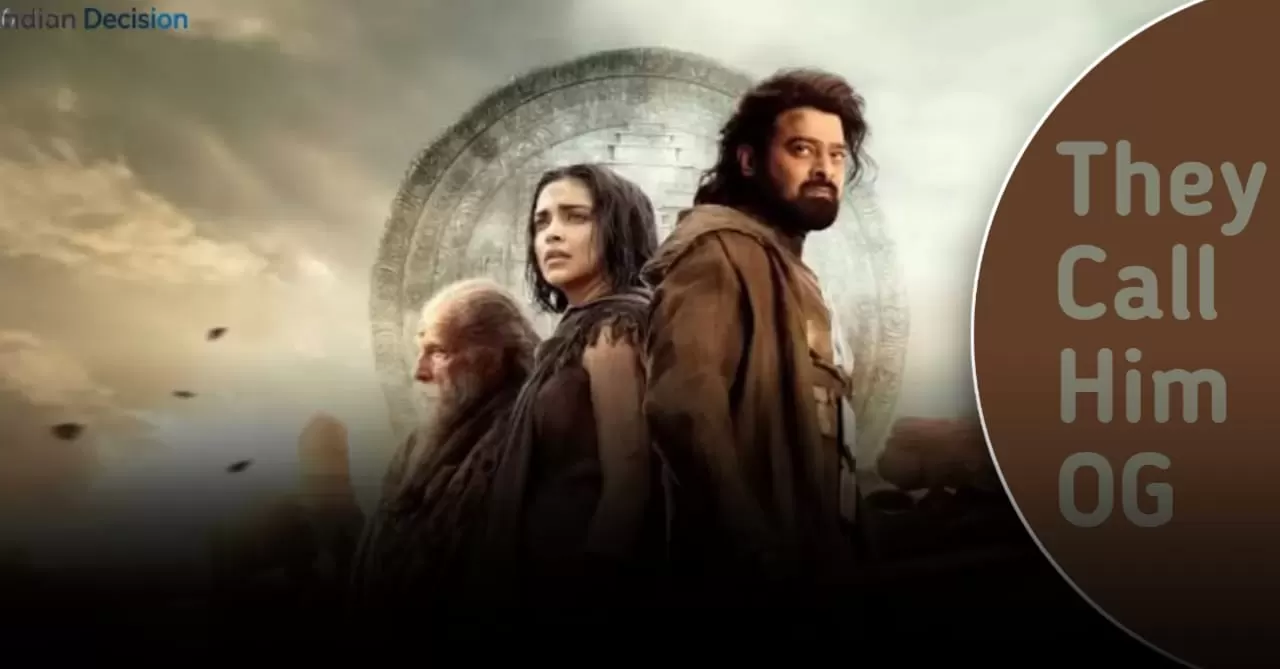
It landed like a punchline everyone in the theater seemed to feel at once. The latest trailer for Kalki 2898 AD had plenty of sweeping visuals, future-tech armies, and dystopian wasteland shots, but the moment that set social media on fire was a short, gritty line delivered with absolute certainty: “They call him OG.” Viewers left the teaser repeating it, quoting it, and turning it into memes before the trailer even finished trending. For many outside Telugu and Hindi cinema circles, the phrase raised a question what exactly does “OG” mean in this universe, and why does the film treat it like such a seismic reveal?
Spending the past week listening to fans, rewatching the trailer, and even talking to a few people who attended the preview screening, what becomes clear is that the line’s resonance is not accidental. It sits right at the intersection of old-school Indian mythic storytelling and modern pop-culture language. “OG” might sound like a casual internet nickname, but inside Kalki 2898 AD, it operates like a title, an identity, almost a legend earned rather than assigned.
A Word With a Global Echo
The phrase “OG” didn’t originate in Indian cinema. It has roots in American street slang, where it originally meant “Original Gangster,” a sign of respect for someone who has been around long enough, survived enough, and earned the right to be recognized as authentic. Over time, the meaning has expanded far beyond crime culture. Today, people use it to refer to someone who is the first, the greatest, the pioneer, or simply a figure who commands respect. In gaming communities, esports, hip-hop, YouTube fandoms, and even sports commentary, “OG” signals someone who has history, status, and proven weight.
So when the line appears in the Kalki 2898 AD trailer, the word carries years of global association. It is modern, sharp, and immediately understood even across languages.
But that’s only half the story. What makes this line memorable is how the film appears to weld the slang meaning of “OG” to something deeply Indian, almost mythic. In a movie mixing ancient scriptures with futuristic world-building, “OG” unexpectedly becomes a title with spiritual undertones rather than just swagger.
The Line as World-Building
Watching the trailer again, the camera holds on a shadow across a dusty battlefield as the voiceover says the line. The characters speaking it don’t seem impressed they sound slightly alarmed, like someone has returned who shouldn’t have. In the screening room, this was the moment audiences leaned forward. People I spoke with in Hyderabad described the cinema as going quiet, then erupting a second later when they realized exactly who was being referenced.
In this world, the name isn’t just a cool tag; it’s recognition. It means the character in question has a history and reputation everyone already knows. Someone the other characters hoped wouldn’t show up again. Someone whose presence shifts the dynamic entirely.
The film doesn’t explain the title directly, which is smart. The mystery fuels curiosity. Audiences get the sense this character has achieved something in the past perhaps in battles, rebellions, or political upheaval that forced the world to remember him.
A Title That Bridges Two Cultures
Indian epics don’t typically use slang-style titles like “OG,” but they do use legend-based identifiers. Arjuna is not just Arjuna; he is “Gudakesha,” “Dhananjaya,” “Savyasachi.” Bhishma is “Devavrata,” “Ganga Putra.” Ancient heroes rarely had only one name. Each identity reflected a phase in their evolution, a mark of something they achieved or endured.
So while “OG” sounds modern, its function in the story is surprisingly traditional. It introduces this character in the same way a bard might introduce a returning warrior in a 2,000-year-old oral recitation. A name alone is not enough the world remembers what he did. The title says it for him.
In conversations with long-time Telugu moviegoers, one observation kept surfacing: the line has echoes of the way older mass entertainers introduced iconic protagonists. Instead of a dramatic background score and slow-motion shot of boots hitting the ground, this film distills the reveal into a verbal punch. It brings the “goosebumps moment” without resorting to the tropes most viewers are tired of by now.
Why Audiences Reacted So Strongly
Part of the charm is the delivery. The trailer doesn’t make a long speech. It doesn’t explain the character’s past or mythology. We only get a confident, almost off-hand declaration that everyone in this universe knows who “he” is. It trusts the audience to fill in the blanks. That confidence is refreshing in a landscape where many mainstream films oversell their stakes before earning them.
There’s also a generational factor. Younger viewers understand the slang instantly. Older viewers may not use the word daily, but they grasp the intent: this is someone respected, feared, or historically powerful. The line acts like a shared handshake between groups who typically react differently to blockbuster movie language.
And then there’s the actor himself. In this case, the persona and star presence behind the line amplify the impact. When a performer known for larger-than-life roles is introduced with a title instead of a name, audiences subconsciously read it as a sign: a big moment is coming.
How the Scene Works Within the Trailer
The placement of the line is also strategic. It arrives after we’ve seen glimpses of a chaotic world ruined landscapes, futuristic war machines, and the sense that humanity is surviving rather than thriving. The world feels bleak and fractured. When someone says “They call him OG,” it signals a shift in momentum. The stakes just changed, and someone capable enough to shift the story has entered the frame.
I watched some fans try to dissect the sequence frame-by-frame online. Forum discussions compared the introduction to classic Hollywood antiheroes. People tagged it alongside Clint Eastwood’s long silences, the early appearances of Wolverine, or even modern action moments in films like John Wick. The idea isn’t that the comparison is literal; it’s that the method of introduction carries the same emotional electricity.
What “OG” Might Mean Inside the Story
Since the film is still unreleased, everything is speculation, but several possibilities make sense based on trailer clues and the film’s mythic themes:
- The character might have led a rebellion in the past, earning the label as the “original” or founding fighter.
- He may be one of the earliest warriors to have opposed the ruling forces in the movie’s dystopian world.
- The title could represent someone who was first to awaken or manifest a particular power or destiny.
- It could even be a twist on prophecy the “one who came before,” returning when needed.
Every interpretation ties back to the same core idea: the world already knows who he is. He doesn’t need a grand introduction. The characters understand the consequences before audiences do.
Comparisons With Older Cinematic Reveals
If you look at the great mass introductions in Indian cinema history from Rajinikanth’s cigarettes to Chiranjeevi’s dramatic silhouettes to Shah Rukh Khan stepping off a train with outstretched arms they all have something in common. The reveal isn’t just about showing the actor. It’s about telling the audience, “Everything changes now.”
Kalki 2898 AD just updates that idea for a new generation. Instead of a long buildup, a visual montage, or an explanatory flashback, the film compresses the energy into a single sentence.
There’s also something liberating in the decision not to overload the scene with exposition. Too many science fiction blockbusters spend valuable minutes explaining their stakes instead of letting viewers feel them. Here, the film trusts the emotional weight of the moment. We understand the character’s importance even before we know his detailed history.
Inside Theaters: How It Played Live
People who watched the trailer debut on the big screen describe the same reaction pattern. A quiet beat, a murmur spreading across the hall, then audible applause. I spoke with a college student in Mumbai who attended a trailer showcase. “The line didn’t even sound loud,” he said. “It sounded like someone saying a fact everyone already knows. That makes it cooler.”
Another viewer, older and more familiar with classic Telugu cinema, compared the moment to early Chiranjeevi introductions. “It reminded me of when the film doesn’t introduce the hero the world introduces him,” he said. “That’s when you know the character matters before he even enters the frame.”
It’s rare for a single dialogue line to dominate meme pages, fan edits, and reaction compilations before the movie has even arrived. That alone shows how deeply the phrase landed.
Why It Works Beyond Marketing
Some might say it’s just a stylish trailer moment, but the line works because it genuinely supports the film’s vision. Kalki 2898 AD attempts something ambitious merging ancient mythology with futuristic science fiction. That combination risks sounding unwieldy if the tone wobbles. The “OG” line helps anchor the world in a language modern audiences understand while still respecting epic tradition.
Think of it this way: in the Mahabharata, when warriors enter the battlefield, the conches blow. Their names are announced. Their reputations arrive before they do. The trailer recreates the same tradition in contemporary slang. Instead of a conch shell, we get a calm voice saying a sentence everyone in that world understands.
A Phrase That Will Likely Stick
Once the full movie releases, we’ll know exactly what “OG” means inside the story. Whether it stands for a title, an achievement, a mythic status, or something more literal, the final answer may expand the meaning even further. But the impact of the line has already done its work.
Movie culture thrives on phrases that become shorthand for emotion. Think “Yippee-ki-yay,” “Say hello to my little friend,” “You come at the king,” or “Why so serious?” Add to that list a line that needed only four words to make audiences sit up and take notice.
They call him OG. And the world of Kalki 2898 AD hasn’t been the same since the moment someone said it out loud.