
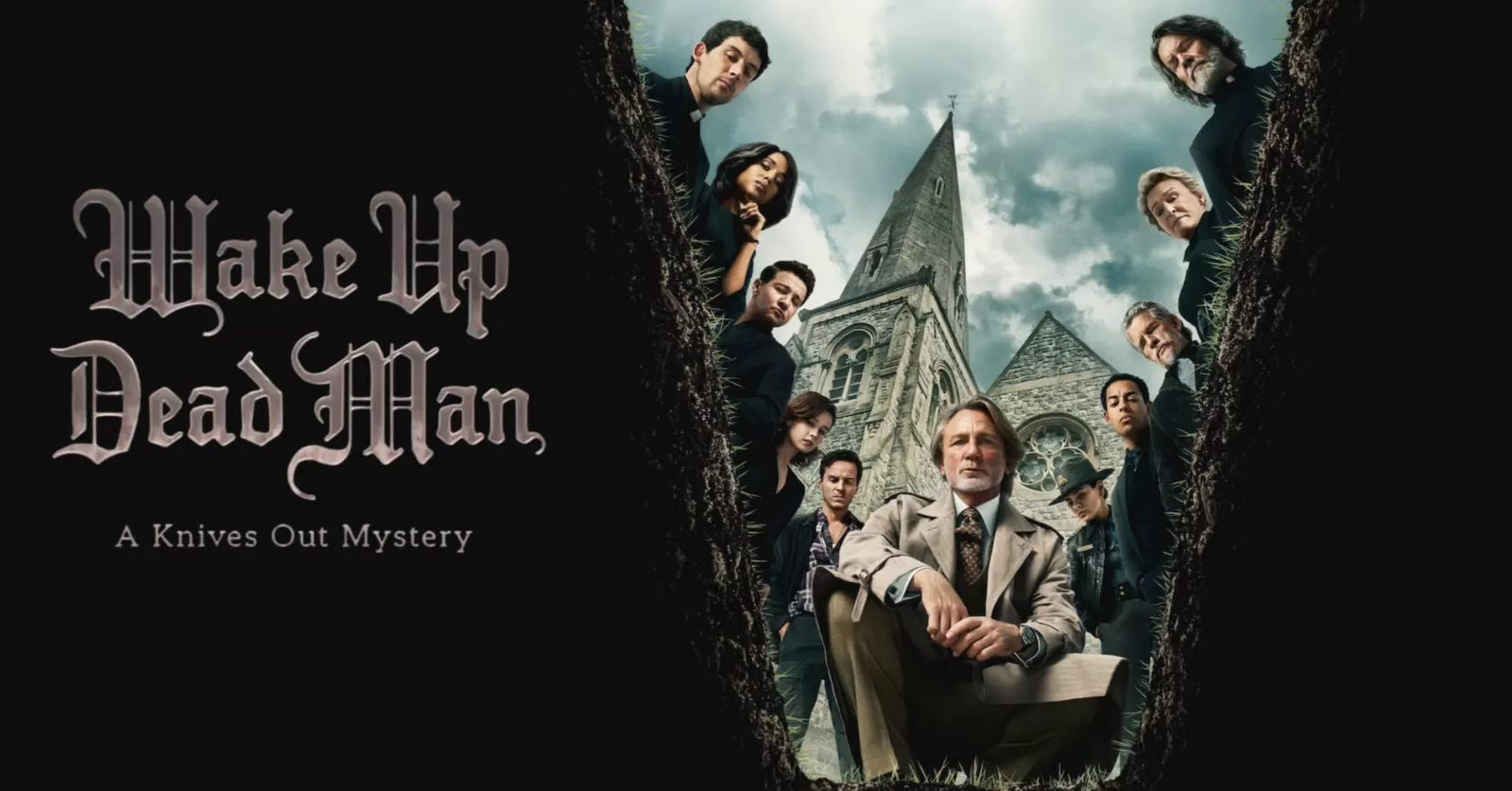
There is a moment early in Wake Up Dead Man when the noise drops away. No grand reveal. No clever monologue. Just a stillness that feels intentional. It signals that this chapter of the Knives Out universe is not chasing spectacle. It is circling something quieter and far more unsettling. Belief.
Unlike its predecessors, which thrived on theatrical twists and playful arrogance, this film moves with restraint. The mystery unfolds patiently, as if aware that certainty itself may be the most dangerous illusion in the room. What emerges is a story less interested in who committed the crime and more focused on why people cling so fiercely to their versions of truth.
A Mystery Built on Conviction, Not Chaos
On the surface, the setup feels familiar. A death that may or may not be accidental. A circle of individuals bound by proximity, history, and quiet tension. Each person arrives armed with an explanation, a justification, or a belief system that shapes how they interpret events.
But the film resists turning this into a puzzle box of clever clues. Instead, it frames the investigation as a slow erosion of certainty. Each revelation does not clarify the truth. It complicates it. Characters are not undone by lies alone, but by the comfort those lies provide.
The mystery advances not through shocking twists, but through contradictions that refuse to align neatly.
The Role of Faith and Moral Authority
Faith, in this story, is not limited to religion. It extends to belief in institutions, personal morality, and self-image. Every major character believes they are acting from a place of righteousness. That belief becomes both shield and weapon.
The film repeatedly asks whether moral certainty excuses harmful choices. Can conviction become a form of violence when it silences doubt? These questions linger beneath every conversation, turning even casual dialogue into a subtle power struggle.
Rather than condemning belief outright, the film examines how easily it can harden into control.
This quieter mystery aligns with the internal questioning found in The JSK Case, and continues the moral unease that runs through One Battle After Another.
Daniel Craig’s Benoit Blanc in a Different Register
Benoit Blanc returns, but in a notably subdued form. Gone are the theatrical flourishes that once defined him. Here, he listens more than he speaks. He allows others to expose themselves through their confidence.
His method feels almost pastoral. He guides conversations gently, never forcing a revelation. This approach mirrors the film’s central theme. Truth cannot be extracted through dominance. It emerges when certainty is allowed to crack.
Blanc’s restraint gives the character a quiet gravity, reinforcing the sense that this mystery is not about intellectual victory, but ethical reckoning.
The Setting as Moral Landscape
The setting plays an unusually active role. Isolated, subdued, and heavy with history, it feels less like a stage and more like a witness. The environment reflects the emotional weight carried by the characters. Nothing feels neutral. Every space seems to remember something.
Unlike earlier films that used extravagant locations to heighten theatricality, this setting compresses the story inward. It demands reflection rather than distraction.
The result is a mystery that feels intimate, almost confessional.
Why This Film May Divide Viewers
Some viewers will admire the film’s restraint. Others may find it frustrating. The absence of flashy twists and comedic excess can feel like a departure from what made the franchise popular.
Those expecting rapid-fire reveals and sharp satire may perceive the pacing as slow. But for viewers willing to sit with ambiguity, the film offers something richer. A mystery that lingers because it refuses easy answers.
The division feels intentional. The film mirrors its own themes by asking audiences to confront their expectations.
A Different Kind of Resolution
When the truth finally surfaces, it does not arrive as triumph. It feels heavy. Consequences matter. Vindication is absent. The resolution acknowledges that understanding does not always bring relief.
This choice reinforces the film’s central idea. Solving the mystery does not restore moral balance. It merely exposes what belief allowed people to justify.
Final Reflection
Wake Up Dead Man is the quietest entry in the Knives Out series, and perhaps the most contemplative. It trades cleverness for conscience, spectacle for silence.
By focusing on faith, certainty, and the discomfort of doubt, the film transforms the whodunit into something closer to a moral inquiry. It leaves viewers not with satisfaction, but with questions. And in a genre built on answers, that may be its boldest move.
Indian Decisions Editorial Note: This review reflects original thematic analysis and does not replicate external criticism or summaries.