
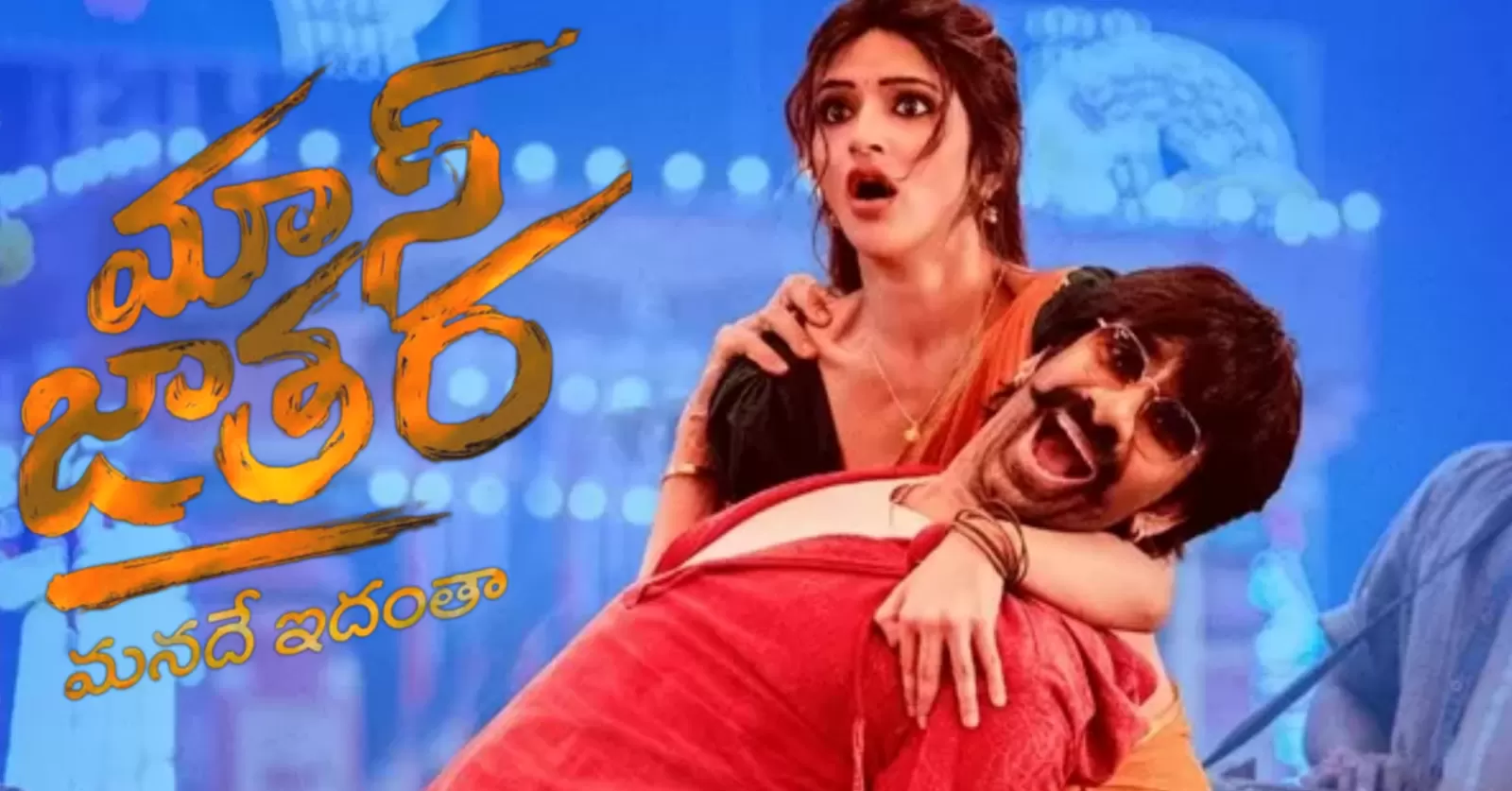
Mass Jathara opens with overwhelming energy. Drums thunder, crowds surge, and color floods the screen. At first glance, it resembles a familiar celebration of power and spectacle. Yet as the film settles into its rhythm, something quieter takes shape. Beneath the noise lies tension. Beneath the celebration, restraint. Without stating it outright, the film poses an unsettling question: what happens when public power becomes a performance no one is allowed to interrupt?
This is not a film interested in subversion for shock value. It relies on familiarity with intent, using recognisable beats to draw the audience in before gradually revealing the emotional cost of maintaining control in spaces designed to look joyful.
What the Story Seems to Be
On the surface, Mass Jathara presents itself as a mass entertainer. A dominant central figure. A charged public environment. Conflict that appears external and solvable through force or charisma. Confrontations escalate amid music, spectacle, and collective devotion.
For many viewers, the film may initially register as a celebration of resilience and authority. Order is restored through strength. Chaos is something to be subdued, not examined. That surface reading is intentional. It establishes comfort before the film quietly begins to question it.
The Film’s Real Obsession: Control Disguised as Unity
What Mass Jathara is truly examining is the fragile boundary between unity and control. The gatherings and rituals are not merely cultural expressions. They function as mechanisms. Emotions are guided. Movement is choreographed. Dissent is softened under the weight of collective enthusiasm.
Control here is rarely overtly violent. It is persuasive. It works through repetition, symbolism, and shared belief. People comply not because they are forced, but because stepping away feels like disloyalty.
The central figure embodies this tension. Their authority is built on trust, yet that trust depends on silence. Questions are discouraged not through punishment, but through the suggestion that questioning itself threatens harmony.
This quiet exploration of silence echoes films like Maharani Season 4, where public leadership relies as much on restraint as on visible power.
Noise as a Cover for Absence
One of the film’s most effective tools is sound. The louder the environment becomes, the less honest it feels. Music swells precisely where conversation might occur. Crowds occupy spaces where reflection could otherwise exist.
The noise acts as insulation. It protects the structure of power by preventing stillness. Silence would be dangerous here, because silence invites thought.
Celebration, the film suggests, is not false. It is simply amplified with purpose.
A Scene That Quietly Shifts the Meaning
Midway through the film, there is a brief moment away from the spectacle. No crowd. No music. Just a conversation that feels almost accidental.
A question is asked that does not fit the rhythm of the world around it. The response is not anger, but deflection. A polite reminder of duty. A smile that closes the discussion without answering it.
This moment matters because it reveals how power survives. Doubt is not crushed. It is absorbed, then left unresolved.
The Central Character’s Blind Spot
The protagonist is not portrayed as cruel. Much of the film’s complexity comes from how sincerely they believe in their role as a stabilizing force.
What they fail to see is the cost of that stability. The quiet sacrifices made by others. The compromises that never reach the stage. Certainty, their greatest strength, becomes their blind spot.
The film treats this with restraint, showing how easily order can be mistaken for justice when applause drowns out dissent.
Why the Film Feels Unsettling Despite Its Scale
Despite its confident tone and large set pieces, Mass Jathara leaves an unsettled feeling. There is no single villain. No moment where the system collapses.
Instead, the film suggests that control often endures because it looks like celebration. Because it feels familiar. Because questioning it requires stepping away from the crowd.
The Thought It Leaves Behind
By the end, the celebration continues. The crowd remains. The system holds.
What changes is the viewer’s awareness. The film leaves behind a quiet, persistent question: when unity depends on silence, who decides which voices are unnecessary?
That question lingers longer than the noise ever could.