
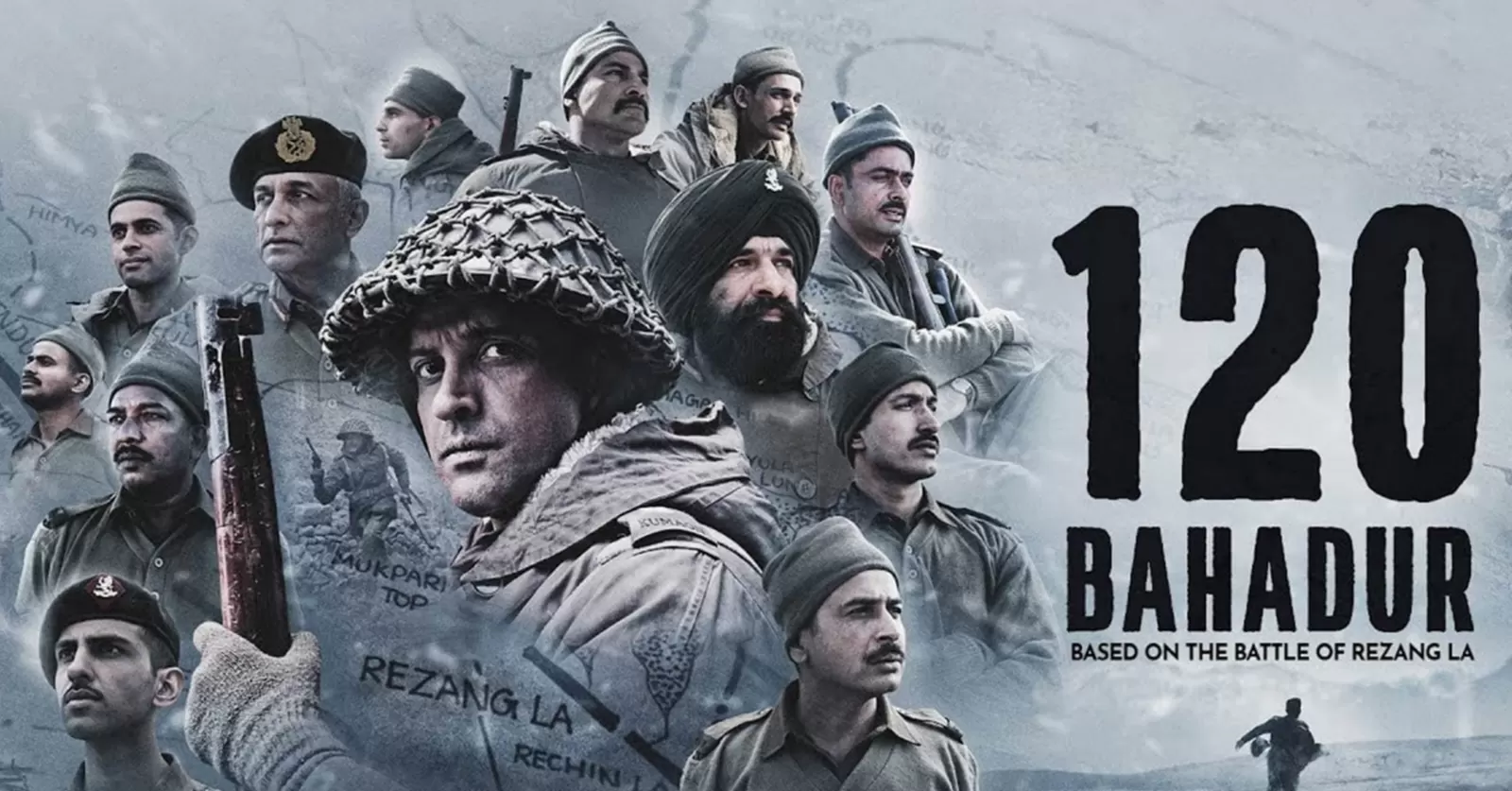
Some films announce their heroism loudly. 120 Bahadur does the opposite. It opens with restraint, allowing silence, routine, and small gestures to carry meaning before any sense of conflict fully emerges. There is no rush to dramatize bravery. Instead, the film lingers on preparation, on the unglamorous spaces where resolve takes shape long before it is tested.
What makes the film quietly affecting is its refusal to frame courage as spectacle. Bravery is treated as something internal, shaped by memory, discipline, and the steady acceptance of risk. This is not a story driven by adrenaline. It is driven by accumulation, of responsibility, expectation, and choices that cannot be undone once made.
The Story as It First Appears
On the surface, 120 Bahadur presents itself as a military drama centered on duty and sacrifice. A unit prepares for a mission that will test both physical endurance and emotional limits. The narrative follows familiar beats: training, camaraderie, anticipation, and the looming presence of danger.
For casual viewers, the film may seem like a straightforward tribute to valor. The emphasis appears to rest on discipline, unity, and national service. Yet this reading only captures part of what the story is trying to hold.
What the Film Is Actually Examining
At its core, 120 Bahadur is a meditation on memory and resolve. The film is less interested in victory than in the moments that lead individuals to stand firm when retreat would be easier. Characters are shaped not by speeches, but by recollection. Past experiences, unspoken losses, and inherited expectations quietly influence every decision.
Resolve here is not loud or triumphant. It is private. Characters wrestle internally with fear, doubt, and fatigue, often without voicing these struggles. The absence of constant dialogue allows the weight of responsibility to feel personal rather than symbolic.
The film suggests that courage is rarely spontaneous. It is built through repetition, acceptance, and the understanding that some choices close off all others.
Rather than glorifying action, 120 Bahadur shares its emotional restraint with Varanasi, and reflects the inward resolve explored in Dude.
The Scene That Defines the Film’s Spirit
There is a moment when action pauses and the characters are left waiting. No commands are issued. No music swells. The stillness stretches longer than expected.
In that pause, the film reveals its true concern. Each character processes what lies ahead differently. Some cling to routine. Others drift into memory. The scene offers no explanation. It trusts the audience to recognize the quiet courage required simply to remain present.
The moment matters because it reframes bravery as endurance rather than action. The real test is not the external challenge, but the decision to move forward despite knowing the cost.
The Character at the Emotional Center
One figure carries much of the film’s emotional weight. This character is not defined by aggression or authority, but by steadiness. What they seek is not recognition, but completion. To see a responsibility through without compromising personal values.
They avoid reflection. Dwelling on fear feels dangerous. Acknowledging vulnerability threatens focus. Emotions are managed quietly, kept behind discipline.
What remains unspoken is the awareness that courage does not erase fear. It exists alongside it. The film treats this understanding with respect, allowing restraint to speak louder than any declaration.
Why the Film Feels Relevant
120 Bahadur resonates because it portrays duty without romantic excess. In a landscape crowded with exaggerated hero narratives, its restraint feels grounded. The film understands that many acts of courage happen without witnesses, applause, or certainty.
Viewers connect not because the stakes are grand, but because the emotional pressure feels familiar. The quiet pull to meet expectations, honor commitments, and move forward despite uncertainty is something many recognize in their own lives.
Where Audiences May Differ
Some viewers will admire the film’s minimalism. They will appreciate its trust in silence and subtlety, finding depth in what is left unsaid.
Others may find the restraint distancing. Those expecting overt drama or clear emotional release may feel the film withholds too much.
The divide reflects the film’s central risk: choosing authenticity over spectacle.
Final Reflection
120 Bahadur does not attempt to define courage in simple terms. It observes it quietly, patiently, and without embellishment.
As the film concludes, it leaves behind a lingering thought: bravery is not always visible in the moment it matters most. Sometimes it exists only in the decision to keep going when turning back would be easier. That quiet resolve becomes the film’s most enduring image.
Editorial note: This article presents original analysis by the Indian Decisions editorial team, focusing on memory, duty, and understated courage.