
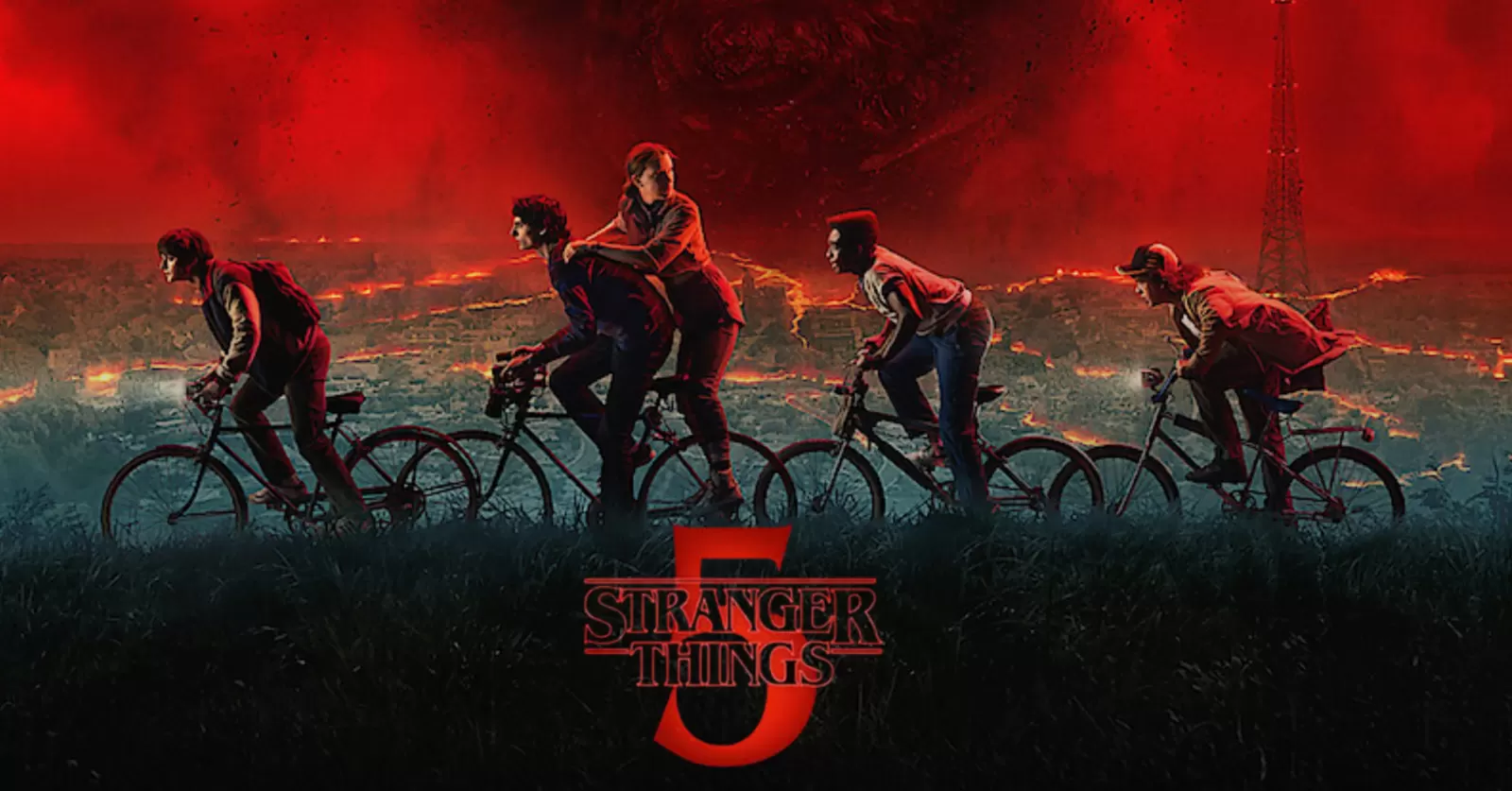
By the time Stranger Things reaches its fifth season, Hawkins no longer feels like a town caught off guard. It feels tired. The fear is familiar now, but that familiarity does not bring comfort. It brings exhaustion. Season 5 opens with a sense that something has already been lost, not just lives or safety, but innocence itself.
The series no longer treats danger as a surprise. It treats it as a condition. That shift changes everything. The monsters are still there, but the real tension comes from watching characters who know what survival costs and are no longer sure how much more they can afford to pay.
What the Story Looks Like on the Surface
At first glance, Season 5 appears to follow familiar ground. Hawkins faces escalating threats from the Upside Down, relationships are tested, and the characters are pulled into another fight that feels unavoidable. Familiar alliances return, and unfinished business demands resolution.
For viewers watching casually, this is the final chapter of a long-running battle. Evil must be confronted. Loose ends must be tied. The town’s fate hangs in the balance, once again.
What the Season Is Actually Confronting
Beneath the supernatural conflict, Season 5 is deeply concerned with trauma. Not as spectacle, but as accumulation. Every character carries residue from what they have endured. The show no longer treats recovery as automatic or heroic.
The season repeatedly returns to the idea that survival does not erase damage. Characters hesitate where they once rushed forward. Silence replaces bravado. Decisions are weighed not against victory, but against emotional cost.
The Upside Down becomes less a separate world and more a reflection of internal fractures. Fear is no longer externalized as something to defeat. It is internalized as something to live with. This is the season’s most unsettling shift.
Its focus on lingering trauma rather than spectacle places the final season closer to Five Nights at Freddy’s 2, while its moral uncertainty recalls the unresolved tension explored in Wake Up Dead Man.
The Moment That Reframes Everything
There is a pivotal sequence where action pauses and the consequences finally catch up. No creature attacks. No powers are used. Instead, characters sit with what has happened and what cannot be undone.
The weight of this scene comes from restraint. The absence of urgency makes the emotional toll unavoidable. It is the first time the series fully allows grief to exist without immediately redirecting it into mission or momentum.
From this point on, the story feels different. The fight is no longer about saving the town alone. It is about deciding what kind of people survive it.
Through the Eyes of One Character
One character embodies the season’s emotional center. They have survived, but survival has hollowed them out. What they want is not heroism or recognition. They want peace.
What they avoid is acknowledgment. Admitting fear would mean admitting that bravery has limits. So they perform strength, even when it costs them connection.
Their silence speaks louder than any confrontation. The show treats this not as weakness, but as an honest portrait of endurance stretched too thin.
Why Season 5 Feels Heavier Than Before
Earlier seasons thrived on momentum. Season 5 slows deliberately. It allows consequences to linger. Characters are no longer defined by cleverness or courage alone, but by restraint and hesitation.
This tonal shift may surprise some viewers, but it feels earned. After years of escalation, the show understands that constant intensity dulls impact. By softening the edges, the story sharpens its emotional focus.
Fear here is not loud. It is persistent. And that makes it harder to escape.
Why the Final Season Divides Audiences
Some viewers appreciate the maturity of this approach. They see Season 5 as a necessary reckoning, one that respects the psychological cost of long-term trauma.
Others miss the faster pace and clearer sense of adventure. For them, the introspection feels heavy, even draining.
The season does not try to reconcile these reactions. It accepts that closure is rarely neat.
A Quiet Ending Thought
Stranger Things Season 5 is not just about ending a story. It is about sitting with what the story leaves behind.
The final question it asks is not whether Hawkins survives, but whether its people can live with what survival demanded of them. That uncertainty lingers long after the screen fades to black.
Editorial note: This article reflects original interpretation and analysis by the Indian Decisions editorial team, grounded in narrative study and thematic observation.